How the Bucket Strategy Helps Manage Sequence of Return Risk in Retirement
If you've been diligently saving and investing for retirement, you may feel confident in your financial plan, especially if it's built on the assumption of earning a strong average return over time. But as many retirees have learned, what happens in the first few years of retirement can be just as important as how your portfolio performs in the long run.
That's because your retirement success isn't just about how much your investments earn - it's also about when those returns happen.
This concept is known as sequence of return risk - the risk that poor market performance early in retirement, combined with regular withdrawals, can permanently reduce your portfolio's ability to recover and grow.
Understanding the Impact: Sequence Risk in Action
To understand just how much of an impact this can have, consider a simple example:
Let's look at two retirees, both with $1 million portfolios and both withdrawing $50,000 a year. If one experiences a poor market in the early years while the other enjoys strong returns up front, their financial outcomes can be drastically different, even if their average annual returns are exactly the same.
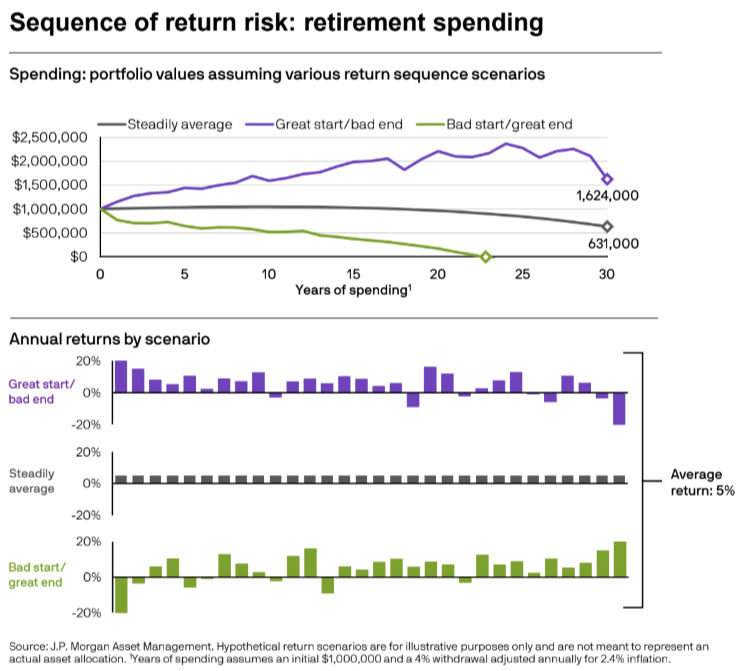
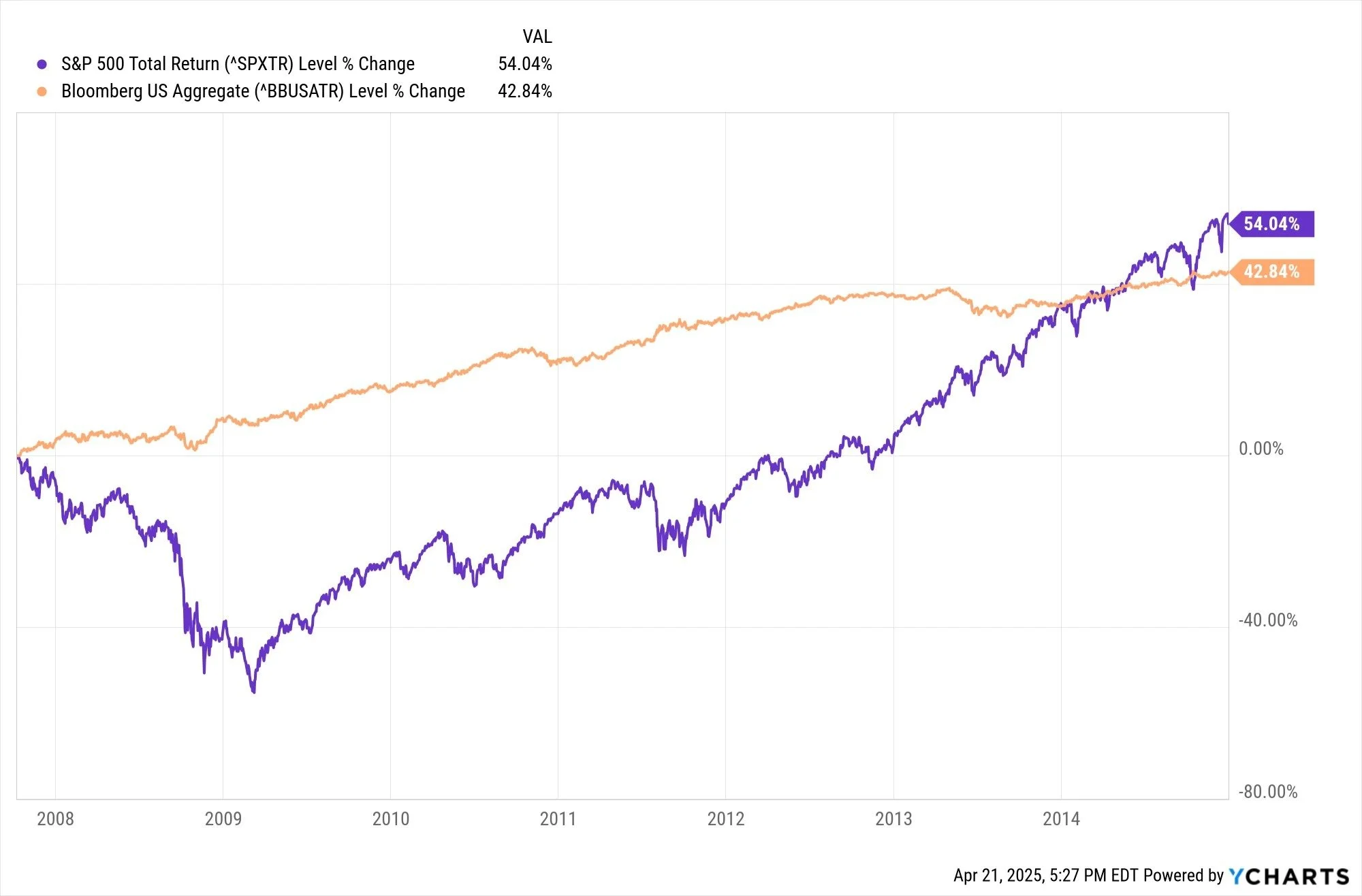
This isn't just a theoretical concern - it's exactly what many retirees experienced during the 2008 financial crisis. If you retired in late 2007 with $1 million, your portfolio would have immediately been hit by the sharp decline of the 2008 financial crisis. During this time, the S&P 500 lost over a third of its value and didn't fully recover for more than seven years.
Meanwhile, bonds (as shown by the Barclays Aggregate Bond Index) remained relatively stable. Investors who were drawing equally from both stocks and bonds during this period had to sell significantly more stock to cover the same expenses, locking in losses that were difficult to recover from.
How the Bucket Strategy Helps
This is where the bucket strategy, explained in our previous article, becomes especially powerful. By setting aside 7-10 years of income needs in more stable assets, like bonds, private real estate, and private credit, you give your growth investments the breathing room they need to recover.
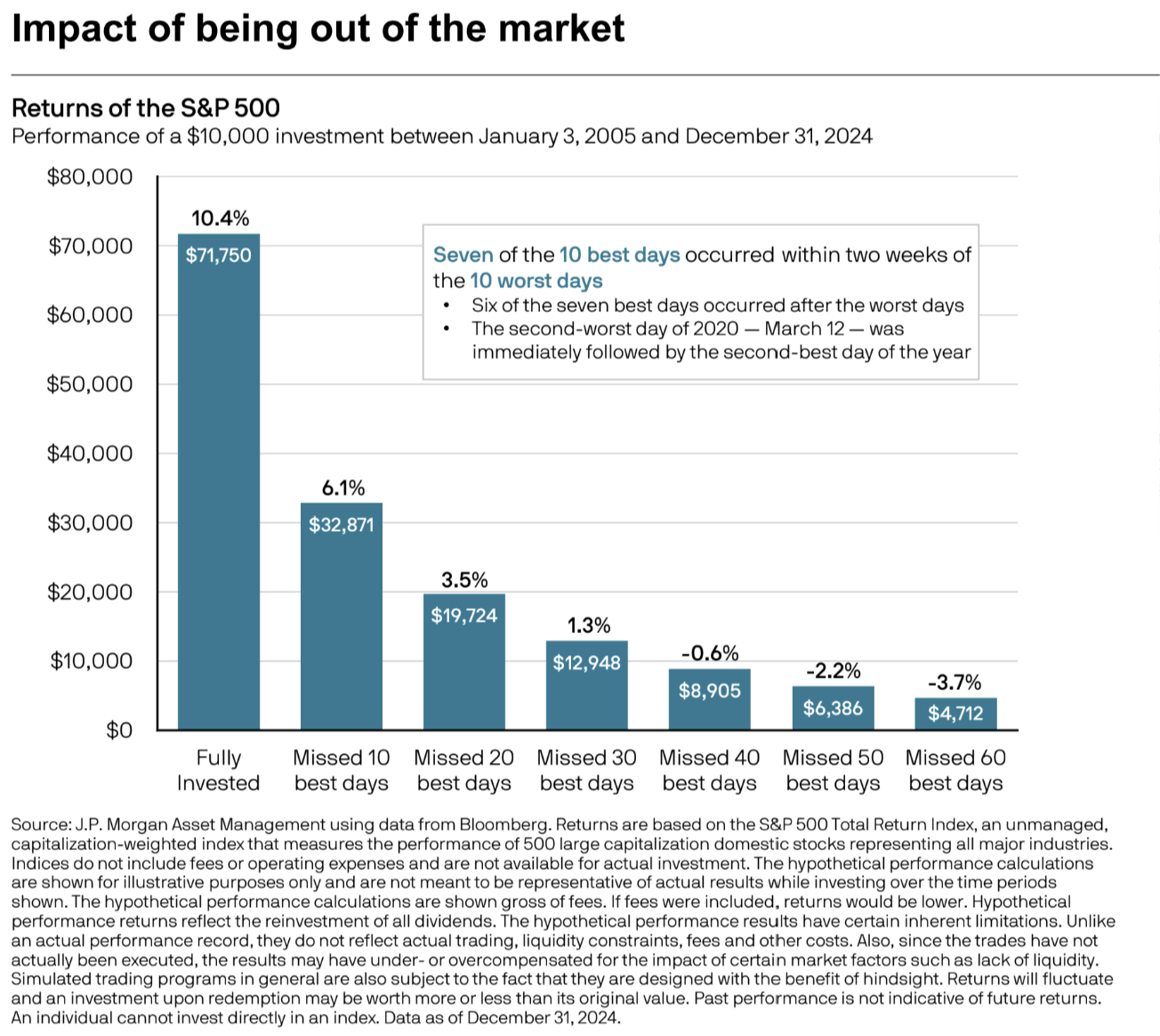
Consider this example: Between January 3, 2005, and December 31, 2024, the S&P 500 had seven of its 10 best days within two weeks of the 10 worst days. In fact, six of the seven best days came after the worst days. In 2020 alone, the second-worst trading day-March 12-was immediately followed by the second-best day of the year.
Missing just a few of those good days can majorly impact long-term returns, which we can see by looking at the following data from the 2008 financial crisis:
Year 1 - 2008 - Portfolio is down 37%. Draw down your Income Bucket (9 years remaining)
Year 2 - 2009 - Market is up, but your portfolio is still down. Draw from your Income Bucket (8 years remaining)
Year 3 - 2010 - Market is up, but your portfolio is still down. Draw from your Income Bucket (7 years remaining)
Year 4 - 2011- Market is up, but your portfolio is still down. Draw from your Income Bucket (6 years remaining)
Year 5 - 2012- Market is up, but your portfolio is still down. Draw from your Income Bucket (5 years remaining)
A $10,000 investment took nearly five years just to break even. But with a solid Income Bucket in place to cover spending, you could afford to wait it out. And once the market recovers, your Growth Bucket can continue to build wealth without interruption.
Right here, your stock portfolio is just back to where it was before the decline. It took you five years just to break even! Since you still have five years of income, we can let the stocks continue to appreciate.
Year 6 - 2013 - Market is up 32.9% - We can refill your Income Bucket with some portfolio growth
Year 7 - 2014 - Market is up 13.69% - We can refill your Income Bucket some more (Reference S&P 500 Index - Historical Annual Data https://www.macrotrends.net/2324/sp-500-historical-chart-data)
It's not just about surviving volatility; it's about using volatility to your advantage. When you don't need to sell, you can actually buy when stocks are down. That's hard to do without a structure like bucketing in place.
This strategy allowed the Growth Bucket to recover while still meeting income needs, avoiding panic selling, and creating room to strategically buy low when others were selling.
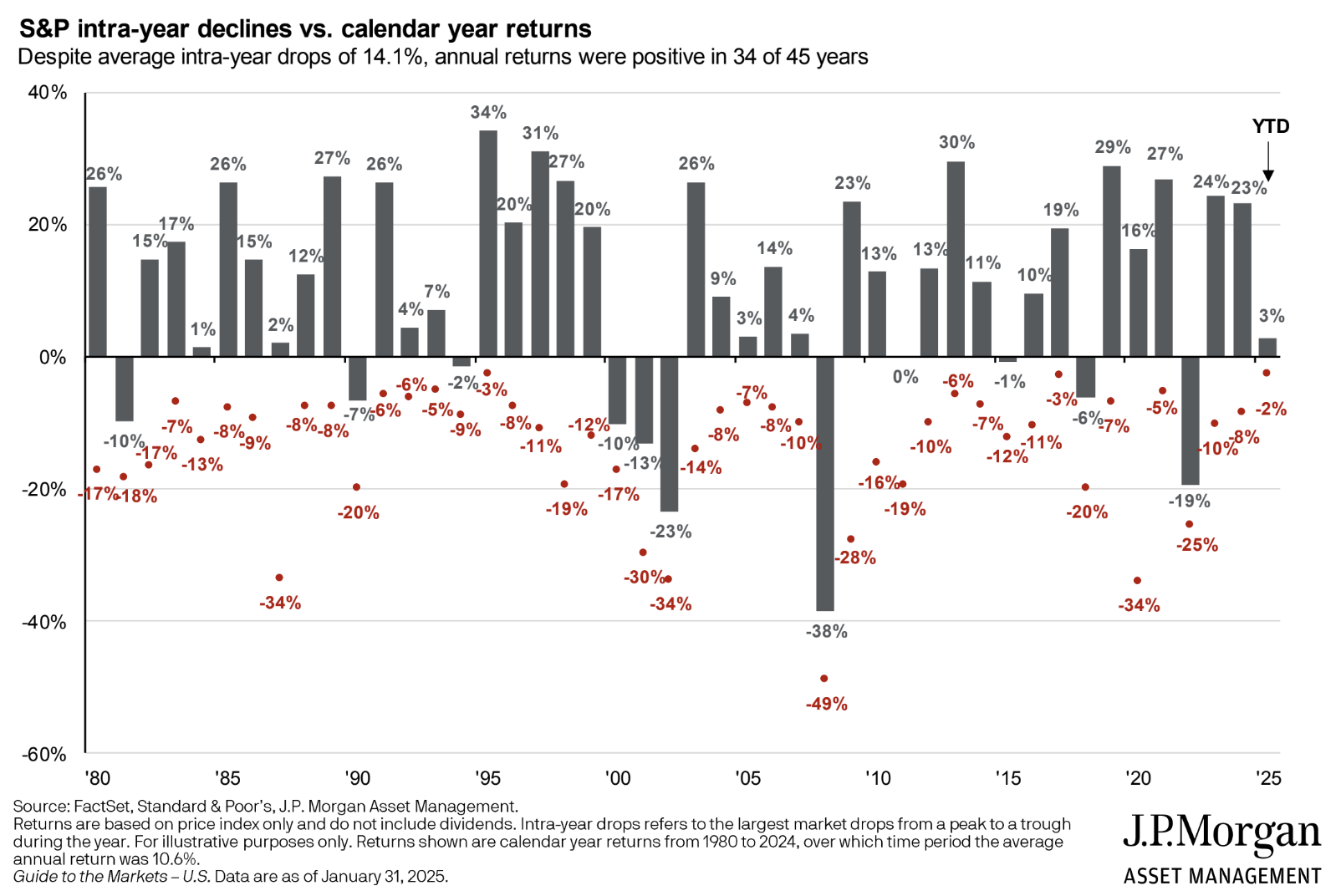
Here's another compelling fact: Despite an average intra-year decline of 14.1%, the S&P 500 posted positive annual returns in 34 of the last 45 years. Staying invested in a well-diversified portfolio through market swings can lead to better retirement outcomes.
The Growth Bucket helps you do just that, giving your investments the time and space to grow while the rest of your plan supports your lifestyle needs.
Other Ways to Reduce Sequence Risk
While the bucket strategy is a powerful defense against sequence risk, it's not the only tool available. Small adjustments to your spending habits, income sources, and retirement timeline can make a significant difference, especially during the critical early years of retirement.
Delay or reduce withdrawals when possible. Whether by continuing part-time work, postponing large discretionary expenses, or scaling back lifestyle spending during market downturns, easing the demand on your portfolio can help preserve assets and give your investments time to recover. Even small adjustments in the early years of retirement can have a meaningful impact over time.
Diversify your income sources. In addition to portfolio withdrawals, consider how Social Security timing, pensions, annuities, or cash reserves can help buffer your income needs during difficult market cycles.
Coordinate across your full financial picture. Taxes, estate plans, healthcare costs, and investment withdrawals are all interconnected. A coordinated strategy ensures you're not solving one problem at the expense of another. Working with a trusted advisor can help align all aspects of your retirement plan so you're well-positioned to weather market uncertainty.
The goal isn't to avoid risk entirely - it's to anticipate and manage it thoughtfully. With the right planning, you can maintain financial stability even when markets are unpredictable.
Why Planning Ahead Matters
Sequence of return risk is unpredictable. No one knows what the market will do in the first few years of retirement. That's why preparing for a range of outcomes is essential.
The bucket strategy gives you that flexibility. It creates a system where short-term volatility doesn't derail long-term plans. It gives your growth assets time to recover and your retirement income a more stable footing.
In short, it's not just a strategy - it's confidence.
Ready to stress-test your retirement plan against sequence risk? Let's talk about how a bucket strategy - and a well-coordinated withdrawal plan - can help keep your income stable, even when markets aren't. Reach out to schedule a conversation.
Rob Clark, CFP®, is a CERTIFIED FINANCIAL PLANNER® professional at INT Wealth Planning, serving upper-income professionals in the Greater St. Louis area. Rob specializes in simplifying complex financial decisions and creating tailored strategies for wealth accumulation and retirement planning. INT Wealth Planning focuses on helping clients get organized, make informed financial decisions, plan for retirement, and pursue financial confidence. Rob can be reached at (636) 777-4207, via email at rob@intwealthplanning.com, or online at www.intwealthplanning.com.
The opinions expressed in this material are for general informational purposes only and are not intended to provide specific advice or recommendations for any individual or on any specific security, investment, or other financial product. No strategy assures success or protects against loss.
This material has been prepared in collaboration with Crystal Marketing Solutions, LLC, and has been edited with the assistance of artificial intelligence tools. The information presented is based on sources believed to be reliable and accurate at the time of publication. This material is for educational purposes only and does not necessarily reflect the views of the author, presenter, or affiliated organizations. It should not be construed as investment, tax, legal, or other professional advice. Always consult a qualified professional regarding your specific situation before making any decisions.
Tracking # 739173